Gymnopedie Sheet Music PDF: A Comprehensive Guide (Updated 02/26/2026)
Discover readily available Gymnopedie sheet music in PDF format, exploring resources for both free and paid options, alongside copyright considerations for musicians today.
What is Gymnopedie?
Gymnopedies are a series of calming piano compositions created by French composer Erik Satie in 1888. Specifically, Gymnopedie No. 1 is the most renowned piece, celebrated for its serene and contemplative character. These works stand out due to their simple melodic lines, unconventional harmonies for the time, and a slow, deliberate tempo.
The term “Gymnopédie” itself originates from ancient Greece, referring to ritualistic dances performed by young men during religious festivals. Satie adopted this title, evoking a sense of ancient ritual and graceful movement, though the music doesn’t directly accompany dance.
Finding Gymnopedie sheet music PDF versions is popular due to the piece’s accessibility for piano players of varying skill levels, making it a frequent choice for learning and performance. Its enduring appeal lies in its ability to create a peaceful and introspective atmosphere.
Erik Satie: The Composer Behind the Music
Erik Satie (1866-1925) was a French composer and pianist, a truly unique figure in late 19th and early 20th-century music. He rejected many conventions of Romanticism, pioneering minimalist and ambient styles long before they were formally defined. Satie was known for his eccentric personality and unconventional musical annotations, often including humorous instructions on the sheet music itself.
He sought to create a new musical language, characterized by simplicity, clarity, and a rejection of grandiosity. This approach is perfectly embodied in the Gymnopedies. His compositions, including the famous Gymnopedie No. 1, often appear deceptively simple, yet possess a subtle harmonic richness.
Accessing Gymnopedie sheet music PDF allows musicians to directly engage with Satie’s innovative style and appreciate his contribution to modern music. His influence extends to numerous composers and genres, solidifying his place as a pivotal figure.
The History of Gymnopedie No. 1
Gymnopedie No. 1, composed in 1888, is the most famous of Erik Satie’s three Gymnopedies. The term “Gymnopedie” refers to ancient Greek choral dances, though Satie’s pieces aren’t directly related to those traditions. He envisioned them as atmospheric, contemplative works, a departure from the prevailing musical trends of the time.
Initially, the Gymnopedies received little attention. However, in the 20th century, they experienced a resurgence in popularity, largely due to their use in film and popular culture. The availability of Gymnopedie sheet music PDF has further contributed to its widespread performance and appreciation.
The piece’s enduring appeal lies in its serene beauty and harmonic simplicity. Finding a reliable Gymnopedie No. 1 sheet music PDF allows musicians to explore this timeless composition and understand its historical context.
Understanding the Musical Characteristics of Gymnopedie
Gymnopedie pieces are characterized by their deliberate simplicity, creating a calming and meditative atmosphere. Analyzing Gymnopedie sheet music PDF reveals a predominantly diatonic melody, avoiding complex chromaticism. The harmonic language relies heavily on parallel chords and static harmony, contributing to the piece’s ethereal quality.
Rhythmically, Gymnopedie maintains a slow, gentle tempo, typically in 3/4 time. The consistent rhythmic pattern, visible in any Gymnopedie sheet music PDF, reinforces the sense of tranquility. These elements combine to produce a unique musical texture, distinct from the more ornate compositions of the late 19th century.
Successfully interpreting a Gymnopedie requires sensitivity to these subtle nuances, making access to accurate sheet music crucial for musicians.
Melodic Simplicity
Gymnopedie melodies, as clearly displayed in any Gymnopedie sheet music PDF, are remarkably straightforward. They largely avoid large leaps or complex ornamentation, favoring stepwise motion and a narrow melodic range. This simplicity isn’t a lack of skill, but a deliberate aesthetic choice by Erik Satie.
Examining a Gymnopedie sheet music PDF reveals that phrases often repeat with slight variations, creating a hypnotic effect. The melodic lines are often modal, lending a timeless and somewhat ambiguous quality to the music. This understated approach allows the harmonic and rhythmic elements to shine.
For learners, the melodic simplicity makes Gymnopedie an accessible piece, though mastering the subtle phrasing requires careful attention to detail when reading the sheet music PDF.
Harmonic Language

Analyzing a Gymnopedie sheet music PDF reveals a harmonic palette that’s both unconventional and captivating for its time. Satie frequently employs parallel chords – chords moving in similar motion – creating a floating, dreamlike quality. Traditional functional harmony, with strong dominant-tonic resolutions, is often avoided.
The sheet music PDF will demonstrate the use of added-note chords, particularly added sixths, which contribute to the music’s ambiguous and ethereal sound. These harmonies aren’t dissonant, but they resist easy categorization. This harmonic approach is a key element of Satie’s unique style.
While seemingly simple, the harmonic language in Gymnopedie, as presented in the sheet music PDF, requires a sensitive touch to bring out its subtle beauty and emotional depth.
Rhythmic Structure
Examining a Gymnopedie sheet music PDF immediately highlights its deceptively simple rhythmic structure. The pieces are typically in 3/4 time, creating a gentle, waltz-like feel, though not intended for dancing. However, Satie deliberately avoids strong rhythmic drive or predictable patterns.
The sheet music PDF will show a consistent use of relatively long note values, often quarter and half notes, contributing to the music’s static and meditative character. Rhythmic interest isn’t created through complex figures, but through subtle variations in phrasing and dynamics.
Analyzing the Gymnopedie sheet music PDF reveals a deliberate ambiguity in the rhythmic pulse, encouraging a free and expressive interpretation. This rhythmic freedom is central to the music’s unique atmosphere.

Finding Gymnopedie Sheet Music PDF Online
Locate Gymnopedie scores through various online platforms, including legitimate free sources, paid websites, and understanding public domain rules for PDF access.
Legitimate Sources for Free Sheet Music
Finding free, legal Gymnopedie sheet music PDFs requires careful navigation. The International Music Score Library Project (IMSLP), also known as the Petrucci Music Library, is a fantastic resource. As Satie’s works are largely in the public domain, IMSLP offers high-quality, scanned scores available for download.
MuseScore is another excellent platform where users contribute sheet music, including arrangements of Gymnopedie. While user-submitted, many scores are verified and accurate. Be sure to check the licensing information before downloading.
Project Gutenberg, though primarily known for literature, sometimes hosts musical scores, including those by Satie. University libraries with digitized collections may also offer free access to Gymnopedie scores. Always verify the source’s legitimacy to avoid copyright infringement and ensure score accuracy.
Paid Sheet Music Websites Offering PDF Downloads
Numerous commercial websites provide Gymnopedie sheet music PDFs for purchase, offering convenience and often, higher-quality arrangements. Musicnotes.com is a popular choice, boasting a vast catalog and various arrangements catering to different skill levels. Sheet Music Plus similarly offers a wide selection, including digitally downloadable PDFs and printed copies.
Virtual Sheet Music specializes in digital sheet music and frequently features Satie’s compositions. These platforms typically offer previews, allowing you to assess the arrangement before buying.
Gumroad and similar creator platforms may host individual arrangements by musicians, providing unique interpretations. While generally reliable, always check seller reviews. Purchasing from reputable sites ensures accurate transcriptions and supports music creators, offering a legal and ethical alternative to potentially unreliable free sources.
Public Domain Status and Copyright Considerations
Erik Satie’s Gymnopedies are largely in the public domain, meaning the original compositions are free from copyright restrictions in many countries, including the United States and European Union. This allows for the legal distribution and reproduction of the original scores. However, be cautious with arrangements and editions.
New arrangements, transcriptions, or editions with specific editorial markings can be copyrighted. Downloading a PDF of a newly arranged version might require a purchase or permission from the arranger. Always verify the copyright status before distributing or performing any arrangement.
Websites offering “free” PDFs may not always adhere to copyright law. Prioritize sources that explicitly state public domain status or offer legitimately licensed content to avoid potential legal issues.
Types of Gymnopedie Sheet Music Available
Explore diverse Gymnopedie PDF options: piano solos, arrangements for guitar or violin, simplified beginner versions, and complex scores for advanced players.
Piano Solo Arrangements
Piano solo arrangements of Gymnopedie are the most commonly found and widely utilized versions of this beautiful piece. These PDF sheet music options typically present Satie’s original composition faithfully, intended for intermediate to advanced piano players. You’ll discover variations in editing quality and presentation, ranging from cleanly typeset scores to scanned copies of older editions.
Many free PDFs available online are piano solo arrangements, though verifying their accuracy is crucial. Paid websites generally offer higher-quality, professionally edited versions. These arrangements often include fingerings and pedal markings to aid performance. Consider the skill level indicated on the sheet music; some arrangements may simplify certain passages for easier playability, while others maintain the original’s complexity. Exploring different editions can reveal subtle interpretive nuances and variations in notation.
Arrangements for Other Instruments (Guitar, Violin, etc.)
Gymnopedie’s serene melody lends itself beautifully to arrangements for instruments beyond the piano. PDF sheet music for guitar (both classical and fingerstyle), violin, cello, and even flute are readily available online. These arrangements often require adaptation, translating the piano’s harmonic texture to the capabilities of the chosen instrument.
Guitar arrangements frequently utilize tablature alongside standard notation, simplifying chord shapes and fingerpicking patterns. Violin and cello versions may present the melody with a simplified accompaniment. When sourcing these PDFs, pay close attention to the arranger’s skill and reputation; some transcriptions are more successful than others in capturing the original’s essence. Be prepared for potential differences in phrasing and dynamics compared to the piano score, reflecting the instrument’s unique character.
Simplified Arrangements for Beginners
Gymnopedie, while seemingly simple, can be challenging for novice piano players. Fortunately, numerous simplified PDF sheet music arrangements cater specifically to beginners. These versions typically reduce the complexity of the left-hand accompaniment, often utilizing single notes or basic chord voicings instead of the original’s fuller harmonies.
Melodies are often presented with larger notation and fewer accidentals, making them easier to read. Fingerings are frequently included to guide hand positioning. When selecting a beginner arrangement, look for those clearly labeled as such and consider previewing a few pages to assess the level of simplification. These arrangements prioritize playability over strict adherence to the original, allowing students to experience the beauty of Gymnopedie while building fundamental skills.
Advanced Arrangements for Experienced Musicians
Gymnopedie sheet music PDFs aren’t limited to beginner-friendly versions; experienced pianists can find arrangements offering significant challenges and artistic depth. These often feature the complete original harmonies, intricate voicing, and nuanced pedal markings, demanding a high level of technical proficiency and musical interpretation.
Some advanced arrangements include embellishments, variations, or even transcriptions for two pianos, expanding upon Satie’s original concept. Seek out editions that prioritize accuracy and scholarly attention to detail, potentially sourced from critical editions or renowned music publishers. These versions aim to capture the full expressive potential of the music, requiring a deep understanding of Satie’s compositional style and harmonic language. Exploring these arrangements provides a rewarding experience for seasoned musicians.
Using Gymnopedie Sheet Music PDF Effectively
Maximize your learning with clear notation understanding, focused practice techniques, and strategies to overcome common difficulties while enjoying this beautiful piece.
Understanding Music Notation Basics
Decoding the language of music is crucial for effectively using Gymnopedie sheet music. Begin with understanding the staff, comprised of five lines and four spaces, where notes are placed to indicate pitch. Learn to identify different note values – whole, half, quarter, and eighth notes – and their corresponding rests, which determine duration.
Pay attention to key signatures, which indicate sharps or flats affecting specific notes throughout the piece. Time signatures reveal the rhythmic framework, showing beats per measure and the note value receiving one beat. Dynamics markings (p for piano, mf for mezzo forte, etc.) guide your expression, while tempo markings (Lento, Andante) dictate the speed.
Familiarize yourself with accidentals (sharps, flats, naturals) altering pitches temporarily. Understanding these fundamental elements unlocks the Gymnopedie’s subtle beauty, allowing for accurate interpretation and a rewarding musical experience. Consistent practice with notation will build fluency.
Tips for Learning Gymnopedie on Piano
Mastering Gymnopedie requires patience and a focused approach. Start by learning each hand separately, focusing on accuracy before combining them. Utilize slow practice, gradually increasing tempo as comfort grows. Pay close attention to the piece’s characteristic legato phrasing – smooth, connected notes – achieved through careful finger work and pedal control.
Break down challenging sections into smaller segments, repeating them until fluent. Listen to recordings of professional performances to internalize the intended musicality and phrasing. Don’t rush; Gymnopedie’s beauty lies in its simplicity and delicate expression.
Focus on maintaining a consistent, even touch and a relaxed posture. Regular, short practice sessions are more effective than infrequent, lengthy ones. Embrace the meditative quality of the music, allowing it to flow naturally through your fingers.
Common Challenges and How to Overcome Them
Many pianists encounter difficulties with Gymnopedie’s sustained pedal usage, leading to muddiness. Practice half-pedaling and clear pedal changes to maintain clarity. The piece’s repetitive nature can also induce monotony; combat this by focusing on subtle dynamic variations and phrasing nuances in each repetition.
Maintaining a consistent tempo without rushing is another frequent hurdle. Use a metronome diligently during practice. Some find the left-hand arpeggios challenging to coordinate; slow, deliberate practice with each hand separately, then gradually combined, is key.
Finally, achieving the desired ethereal quality requires a delicate touch. Experiment with voicing – bringing out the melody while subtly supporting it with the accompaniment – to unlock the piece’s emotional depth.
Potential Issues with Online PDF Sheet Music
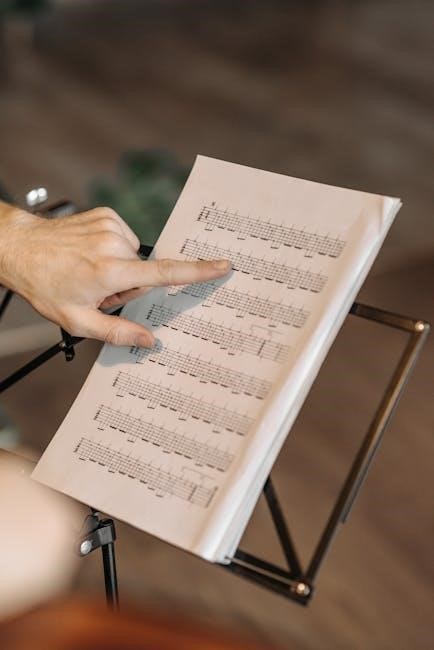
Beware of inaccuracies in transcriptions, poor PDF quality hindering readability, and potential virus risks when downloading Gymnopedie sheet music PDFs from unverified sources online.
Accuracy of Transcriptions
One significant concern with freely available Gymnopedie sheet music PDFs is the potential for inaccuracies in the transcription process. Many online sources rely on user-submitted transcriptions, which may contain errors stemming from misinterpretation of the original score, or simply careless mistakes during digitization. These errors can range from incorrect notes and rhythms to flawed dynamics and articulation markings.
For learners, relying on inaccurate sheet music can hinder proper technique development and musical understanding. Repeatedly practicing incorrect passages can ingrain bad habits that are difficult to correct later. Experienced musicians may quickly identify discrepancies, but beginners might unknowingly learn the piece incorrectly. Therefore, it’s crucial to cross-reference multiple sources, especially when using free PDFs, and ideally compare them to a trusted, professionally published edition of Gymnopedie.
Always be critical and verify the accuracy before committing to learning from a particular PDF.
PDF Quality and Readability
The quality of Gymnopedie sheet music PDFs available online can vary dramatically, significantly impacting readability and ease of use. Poorly scanned or digitally created PDFs may suffer from low resolution, resulting in blurry notes, faded lines, and illegible markings. This is particularly problematic for complex passages or for musicians with visual impairments.
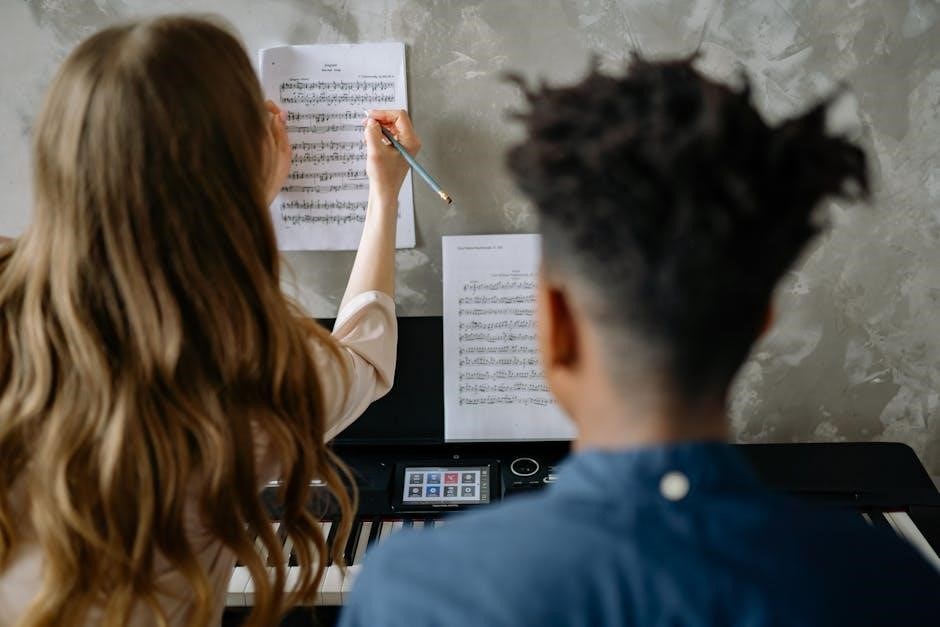
Furthermore, some PDFs lack proper formatting, with cramped notation or inconsistent page layouts. These issues can make it difficult to follow the music visually, slowing down the learning process and increasing the risk of errors. A clear, well-formatted PDF should have crisp notation, adequate spacing, and a logical page flow.
Before downloading, preview the PDF if possible, and assess its overall clarity. A high-quality PDF will enhance your learning experience, while a poor one can be frustrating and counterproductive.
Virus and Malware Risks
Downloading Gymnopedie sheet music PDFs from untrustworthy sources carries inherent risks of encountering viruses and malware. Many websites offering “free” sheet music are poorly moderated and can be breeding grounds for malicious software disguised as harmless files. These threats can compromise your device, steal personal information, or disrupt your system’s functionality.
Malicious PDFs can exploit vulnerabilities in PDF readers, silently installing malware upon opening. Always ensure your antivirus software is up-to-date and perform a scan on any downloaded PDF before opening it. Exercise extreme caution when clicking on links from unfamiliar websites or downloading files from peer-to-peer sharing platforms.
Prioritize downloading from reputable sources and consider using a dedicated PDF viewer with built-in security features to mitigate these risks and protect your digital wellbeing.
Alternatives to PDF Sheet Music
Explore printed editions, interactive music learning apps, and streaming services offering Gymnopedie sheet music for diverse learning styles and convenient access today.
Printed Sheet Music
Traditional printed sheet music remains a highly reliable and preferred option for many musicians learning Gymnopedie. Unlike digital PDFs, physical copies eliminate concerns about file corruption, readability issues on different devices, or potential malware risks associated with online downloads. The tactile experience of turning pages and making annotations directly on the score is valued by numerous pianists and instrumentalists.
High-quality printed editions often feature carefully engraved notation, clear layouts, and durable paper stock, enhancing the overall learning experience. Reputable music publishers ensure accuracy and adherence to the composer’s intentions. While potentially more expensive upfront than free PDF downloads, printed music offers longevity and a tangible resource for practice and performance. Consider exploring selections from established publishers specializing in classical music for the best quality Gymnopedie scores.
Furthermore, printed music avoids the distractions of digital devices, fostering focused practice sessions. It’s an excellent choice for those who prefer a screen-free learning environment and appreciate the aesthetic appeal of a well-presented musical score.
Music Learning Apps
Several innovative music learning applications now integrate sheet music access, offering a dynamic alternative to traditional PDFs. These apps often feature interactive scores, allowing users to adjust tempo, loop sections, and even hear the music played back – beneficial for learning Gymnopedie’s delicate nuances. Many provide guided lessons, fingerings, and practice tools tailored to different skill levels.
Subscription-based models typically grant access to extensive libraries of sheet music, including Gymnopedie arrangements, alongside educational resources. Some apps utilize gamification to motivate learners and track progress. The convenience of having sheet music and learning tools consolidated on a mobile device is a significant advantage.
However, it’s crucial to evaluate app quality and ensure the sheet music transcriptions are accurate. While offering a modern learning experience, these apps may not always replicate the clarity and detail of professionally printed scores. Consider free trials to assess suitability before committing to a subscription.
Online Music Streaming Services with Sheet Music Features
Increasingly, popular music streaming platforms are expanding their offerings to include integrated sheet music access. These services often provide synchronized lyrics alongside audio playback, and are now extending this functionality to musical scores, including pieces like Gymnopedie. Users can follow along with the music in real-time, enhancing comprehension and facilitating learning.
Typically, these features operate on a subscription basis, granting access to a vast catalog of sheet music alongside unlimited streaming. Some platforms offer interactive scores with adjustable tempo and looping capabilities. This provides a convenient and immersive learning experience, particularly for visual and auditory learners.
However, the selection of Gymnopedie arrangements may vary between services. It’s important to verify the availability of desired arrangements and assess the quality of the sheet music transcriptions before subscribing. These services represent a growing trend in music education, blending accessibility with interactive learning tools.